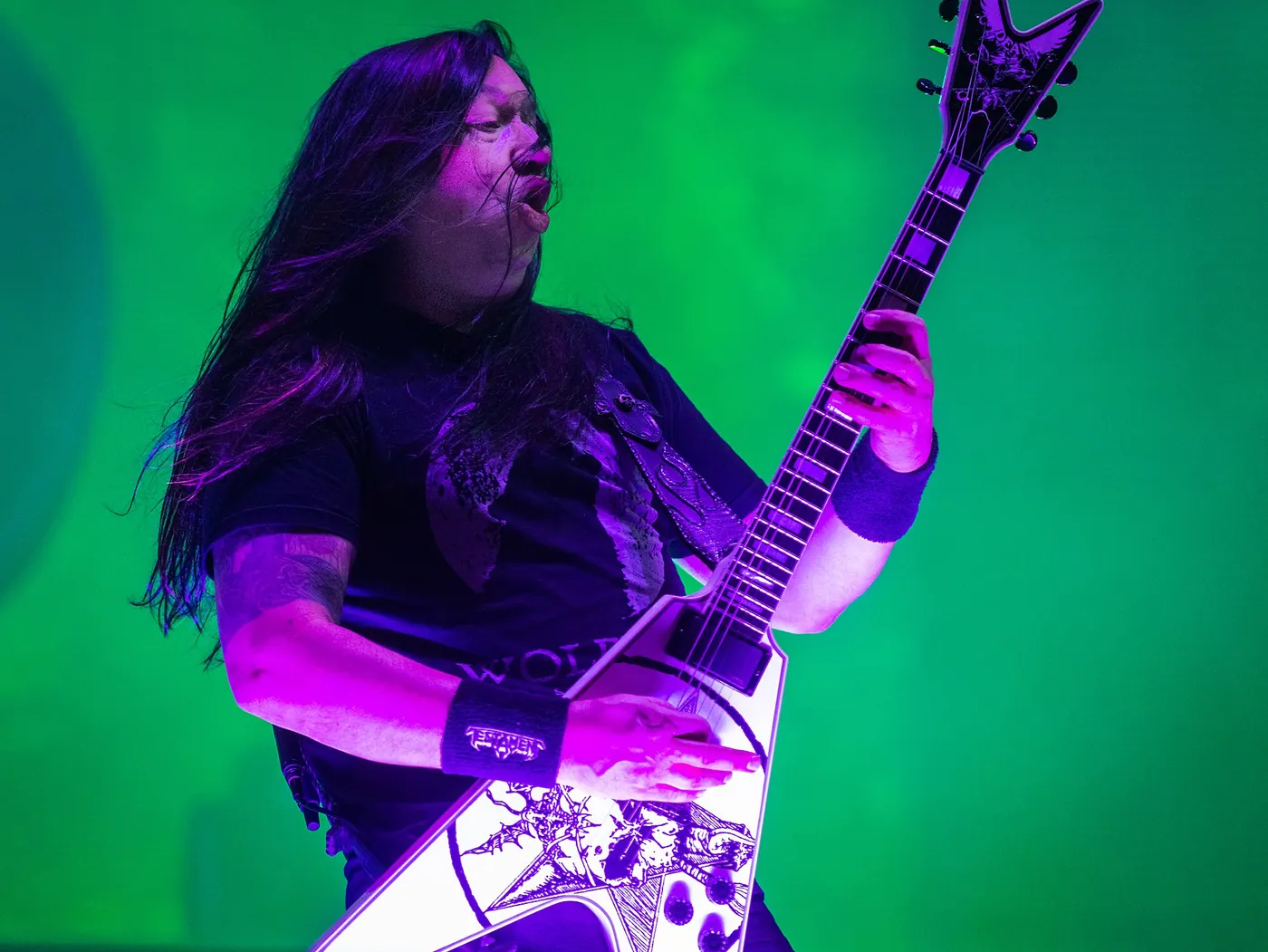
Testament’s music brings two powerful attractions into the same frame: the physical drive of Bay Area thrash and the expressive possibilities of melodic guitar. A riff can feel firm and immediate while a lead phrase introduces a different emotional color. The band makes those qualities work together, giving its recordings both a strong foundation and room to explore.
For a new listener, that balance is a useful starting point. There are memorable themes to recognize quickly, detailed performances to revisit, and albums that reveal different approaches to the same musical identity. The most rewarding route begins with the relationship between the band’s players.
A strong rhythm part creates space for expression
Eric Peterson’s guitar writing gives much of Testament’s music a clear structural backbone. The riffs have a definite rhythmic profile, helping the ear recognize where a phrase begins, how it develops, and when it returns. That clarity allows the arrangement to carry considerable instrumental detail without losing its direction.
"Into the Pit" offers a direct introduction to the band’s rhythmic authority. The main ideas arrive with an emphatic shape, and the performance makes their relationship easy to follow. A listener can connect with the physical movement immediately, then return to examine the smaller accents that give the passage its character.
"Over the Wall" provides another useful example. Its guitar identity is prominent enough to guide the listener through the song, while the surrounding ensemble supplies momentum and contrast. The writing demonstrates how an effective rhythm part can support both a memorable vocal and a more expansive lead performance.
Alex Skolnick brings a melodic conversation
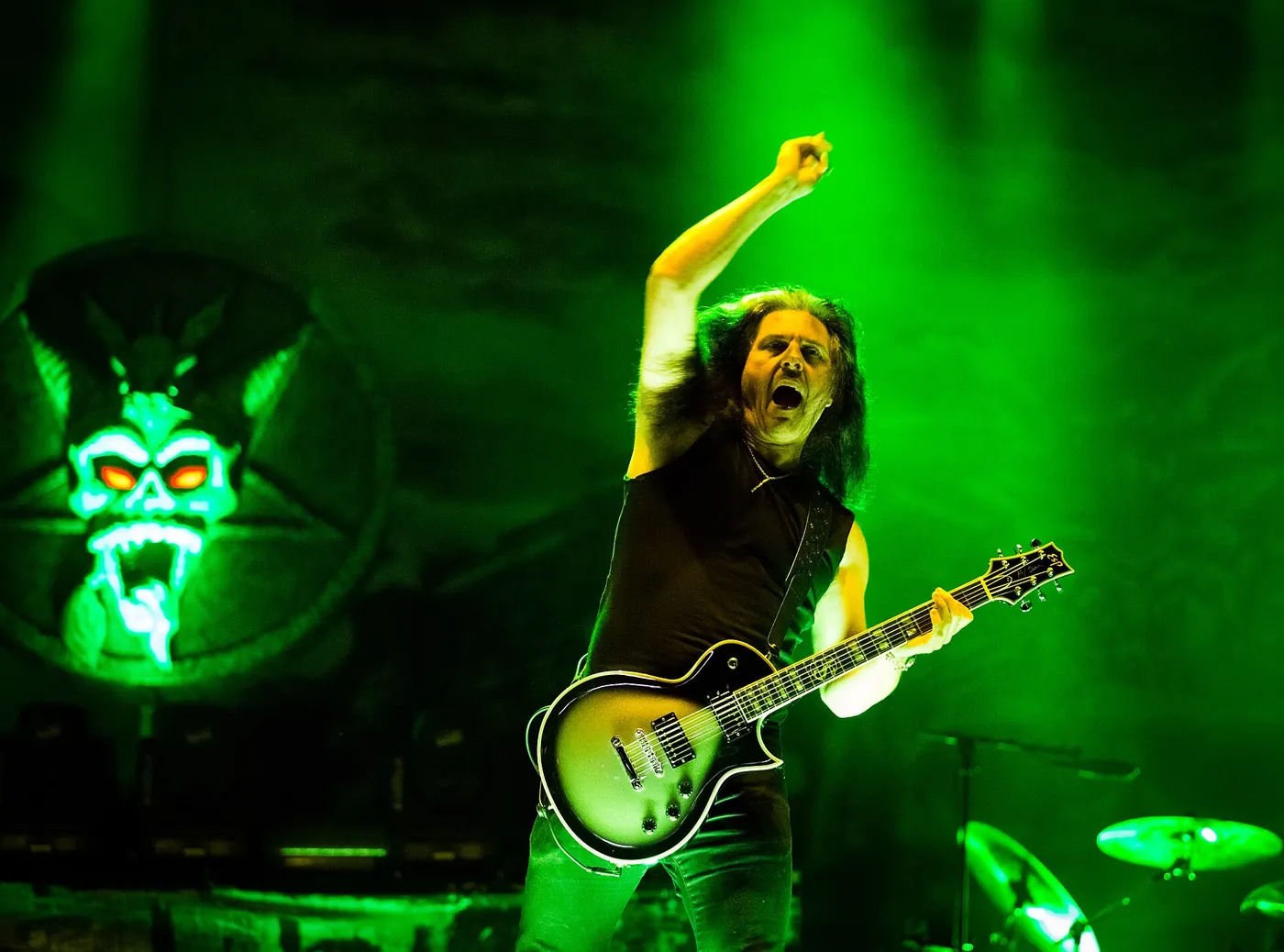
Alex Skolnick’s lead playing adds a recognizable expressive voice to Testament’s classic recordings. The phrasing can move quickly, but its musical direction remains important. A bend, a sustained note, or a carefully shaped melodic turn gives the ear a destination within the faster movement.
The title track of "Practice What You Preach" is an especially welcoming place to explore that quality. Its central framework leaves room for a lead performance that feels connected to the song’s overall character. The solo adds another dimension to the arrangement while retaining a sense of continuity.
Try hearing the lead guitar as an additional singer. Notice where a phrase seems to ask a question, where another answers it, and where a longer note lets the idea settle. This listening approach makes the instrumental detail more accessible and highlights the expressive purpose behind the technical execution.
Chuck Billy gives the ensemble a clear center
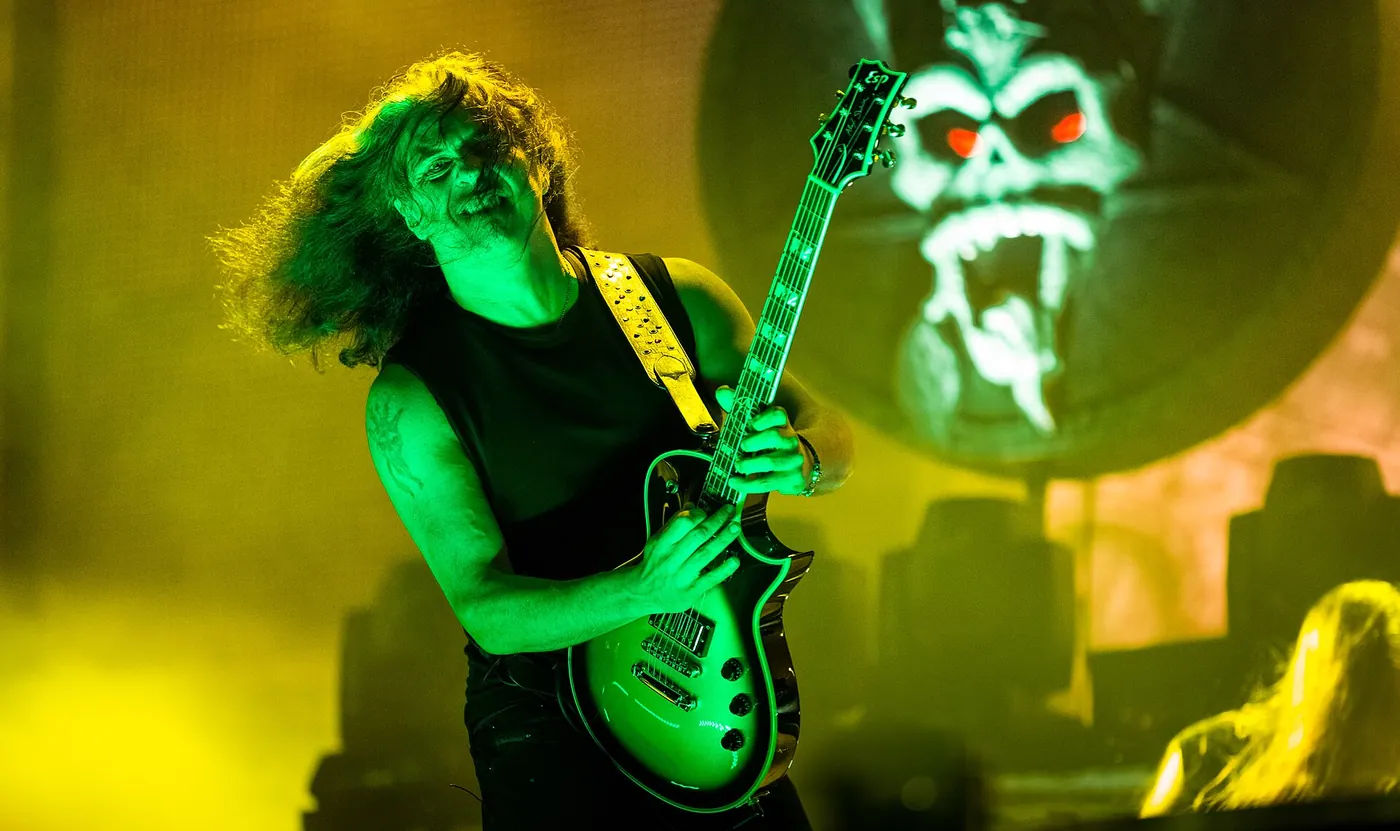
Chuck Billy’s voice supplies another defining part of Testament’s musical identity. Its weight and recognizable phrasing can give a dense arrangement a strong point of focus. The vocal line helps organize the listener’s experience, connecting the instrumental movement to a memorable central performance.
"The New Order" is a rewarding example of a song establishing atmosphere before its full energy unfolds. The voice enters an already recognizable musical world, and the relationship between vocal and guitar phrases gives the arrangement a clear dramatic shape.
Testament also make room for a more melodic scale of expression. "The Ballad" is a useful next step for listeners interested in that side of the band. Its changing intensity allows the voice and guitars to reveal a different kind of emotional character while preserving the ensemble’s distinctive musical presence.
Albums show the value of a consistent identity
The band’s official discography documents The Legacy in 1987, The New Order in 1988, and Practice What You Preach in 1989. These albums provide a clear introduction to the foundations of Testament’s sound and to the way their songwriting developed across those early releases.
The official band site extends the map through records including The Gathering, The Formation of Damnation, and Titans of Creation. Hearing selections from different periods shows how a recognizable musical identity can support changes in production, arrangement, and instrumental emphasis.
For an album-length introduction, choose The New Order if its combination of atmosphere and energetic riffing appeals to you. Practice What You Preach is an inviting alternative for someone drawn toward prominent melodic guitar. Give the full sequence time to establish its pace; the relationships between songs add another layer to the experience.
Hear the teamwork beneath the individual performances
The most revealing detail is often the handoff between players. A rhythm figure creates a stable setting, the drums mark a transition, and a lead phrase takes the song toward a new point of interest. When the vocal returns, the instrumental journey gives that familiar voice a refreshed context.
Begin a short session with "Over the Wall," "Into the Pit," "Practice What You Preach," and "The Ballad." These songs offer distinct entrances into the band’s range. On later listens, follow a single instrument through an entire track to hear how its role changes from one section to another.
Testament’s appeal is rooted in that productive balance. The music has the momentum that makes thrash physically engaging, along with melodic detail that rewards patient attention. Each musician contributes a recognizable voice, yet the arrangement remains the shared focus. The result is a catalog full of strong riffs, expressive phrasing, and rewarding musical connections.
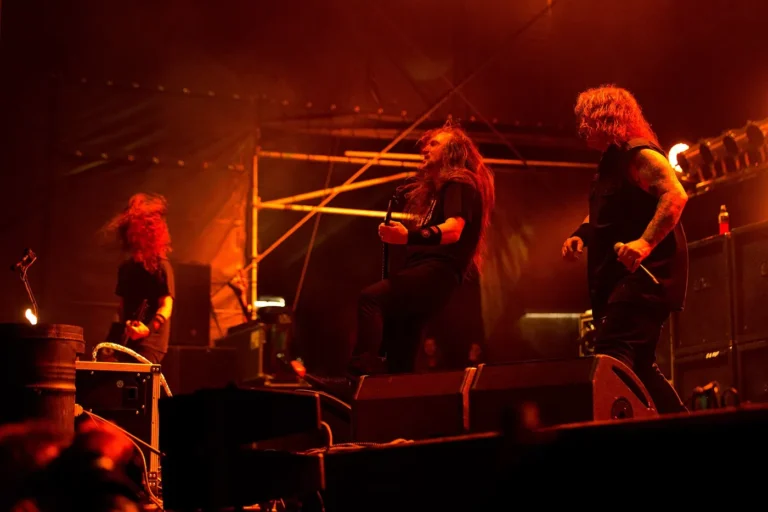
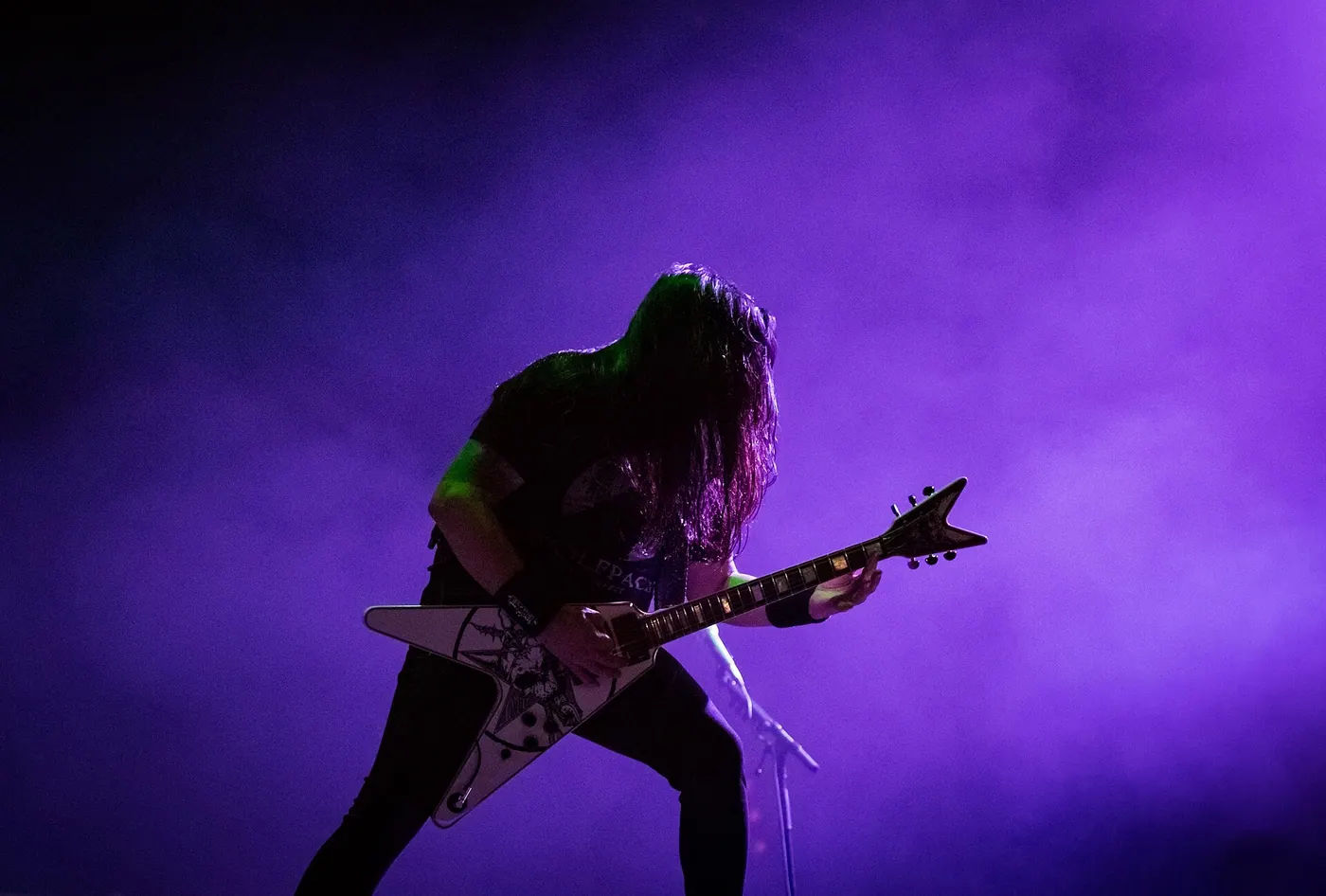
Featured image: A Testament guitarist performing at Wacken Open Air in 2016. Photo: Andreas Lawen, Fotandi / Wikimedia Commons source / CC BY-SA 3.0. Resized and converted to WebP.