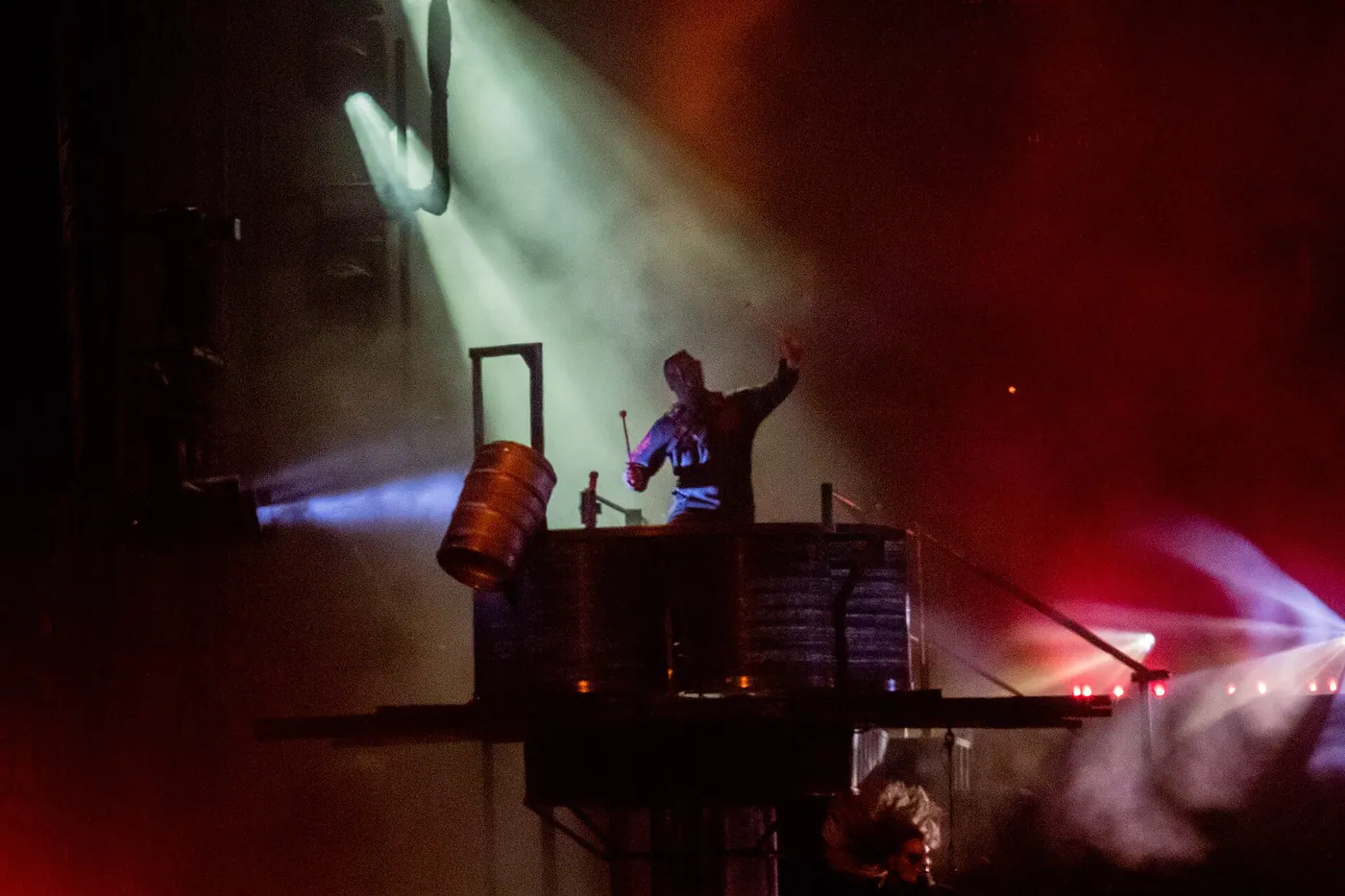
Slipknot create a musical world in which rhythm, texture, melody, and visual performance all contribute to the same experience. A song can feel crowded with activity while still giving the listener a clear idea to remember. That ability to organize a large palette is one of the band’s most interesting creative strengths.
Their catalog offers several ways in. Some listeners connect first with an emphatic rhythmic figure, others with a melodic chorus, and others with the atmosphere surrounding the instruments. Exploring how those entrances relate makes the band’s recordings more revealing and helps explain the strength of their shared identity.
Percussion gives the music several layers of motion
Slipknot’s established musical vocabulary includes a drum kit, additional percussion, and electronic textures. Those elements can reinforce the same accent or create activity around a central pulse. The result gives a passage more than one physical layer while retaining a recognizable sense of direction.
"People = Shit" is a useful example of the band presenting an intensely coordinated ensemble sound. Concentrate on the main rhythmic shape, then notice how additional sounds contribute to its movement. The arrangement becomes easier to understand when those layers are heard as parts of one organized performance.
"Wait and Bleed" offers another, more compact introduction. Its musical identity appears quickly, giving the listener a strong point of reference while the surrounding texture remains active. The song demonstrates how a band with an extensive instrumental palette can still build a direct, memorable structure.
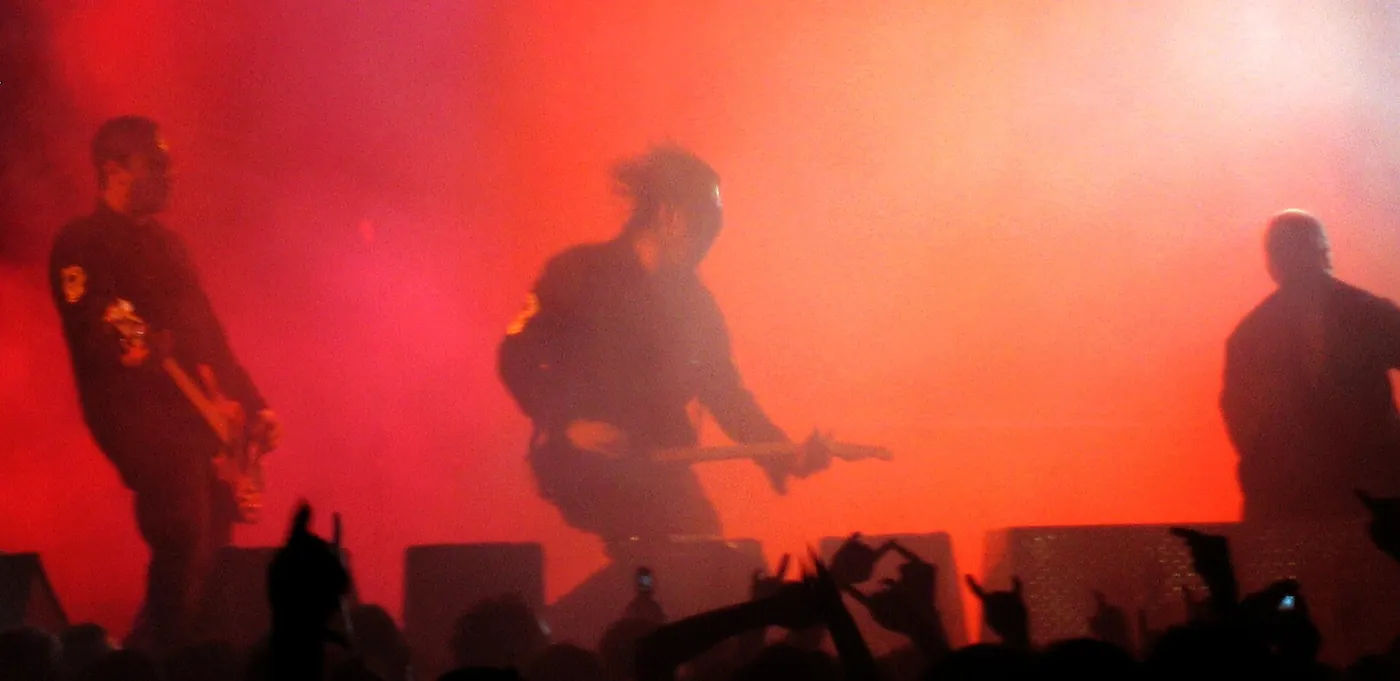
Guitars bring clarity to a dense arrangement
The guitar work associated with Jim Root and Mick Thomson gives much of the band’s catalog a firm outline. A distinctive central figure can hold the arrangement together while percussion and electronic sounds add other colors. The guitar part acts as a recognizable frame within the larger musical picture.
"Before I Forget" makes that relationship especially inviting. The repeating figure has a clear contour, and the ensemble presents its accents with confidence. A listener can recognize the central movement quickly, making the surrounding detail easier to explore on a later visit.
"Duality" provides a complementary example of the band managing a gradual change in scale. The arrangement introduces its character before opening toward a broad, memorable chorus. The transition works because the musical elements feel connected; each new layer enlarges an idea that the listener has already begun to understand.

Corey Taylor makes contrast part of the song
Corey Taylor’s singing provides a particularly recognizable link between different parts of Slipknot’s musical world. A forceful rhythmic delivery and a sustained melodic line can serve different purposes within the same arrangement. The contrast creates changes in emotional scale while keeping a clear vocal personality at the center.
"Unsainted" is a rewarding place to explore that balance. Its opening texture establishes an atmosphere before the band’s fuller sound arrives. The melodic material gives the listener something distinct to hold onto, while the rhythmic foundation supplies a different source of energy.
"Snuff" reveals another part of the catalog’s expressive range. The more spacious presentation gives vocal phrasing and melodic development a prominent role. Hearing it alongside a dense ensemble track highlights the importance of songwriting beneath the band’s recognizable sonic and visual identity.
An effective comparison is to place "Snuff" beside "Duality" and follow the first complete vocal phrase in each. The instrumental scale differs, but both give the voice a defined role in establishing the song’s identity. This makes the contrast musically instructive: a strong melodic line can communicate through a restrained setting or become the center of a much larger ensemble sound. The arrangement determines how that same expressive clarity reaches the listener.
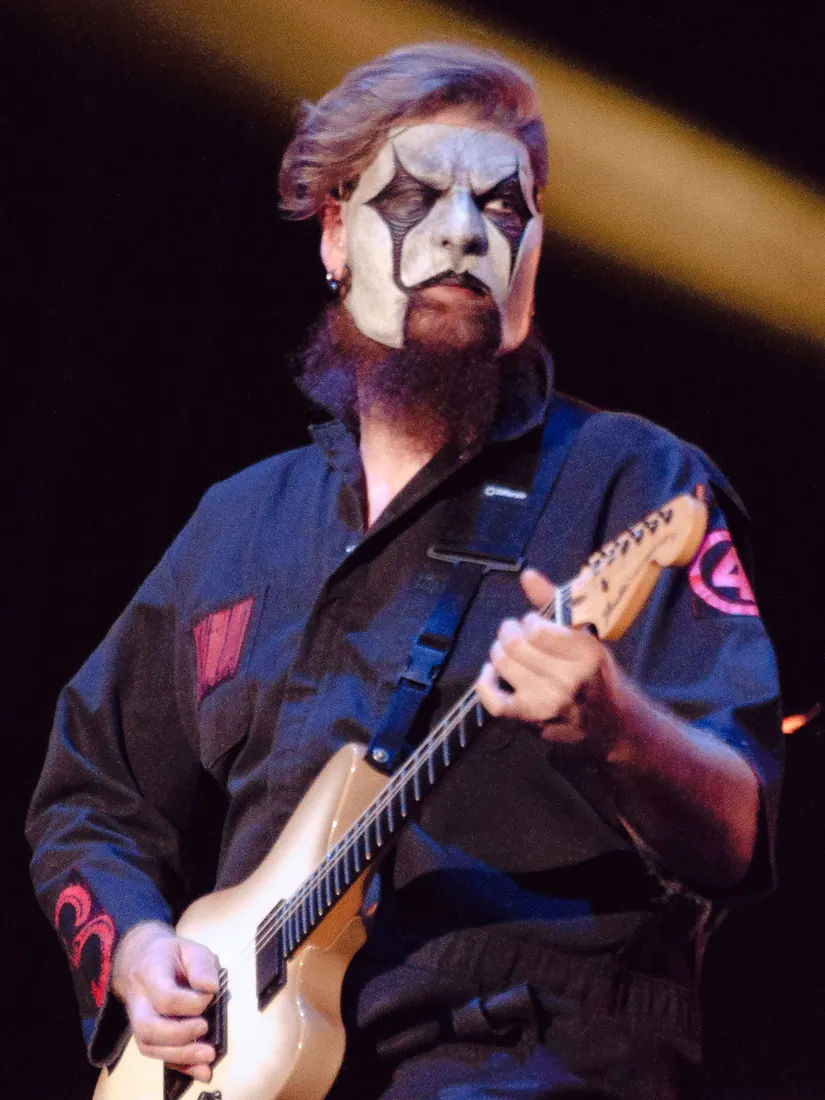
The visual world supports a collective performance
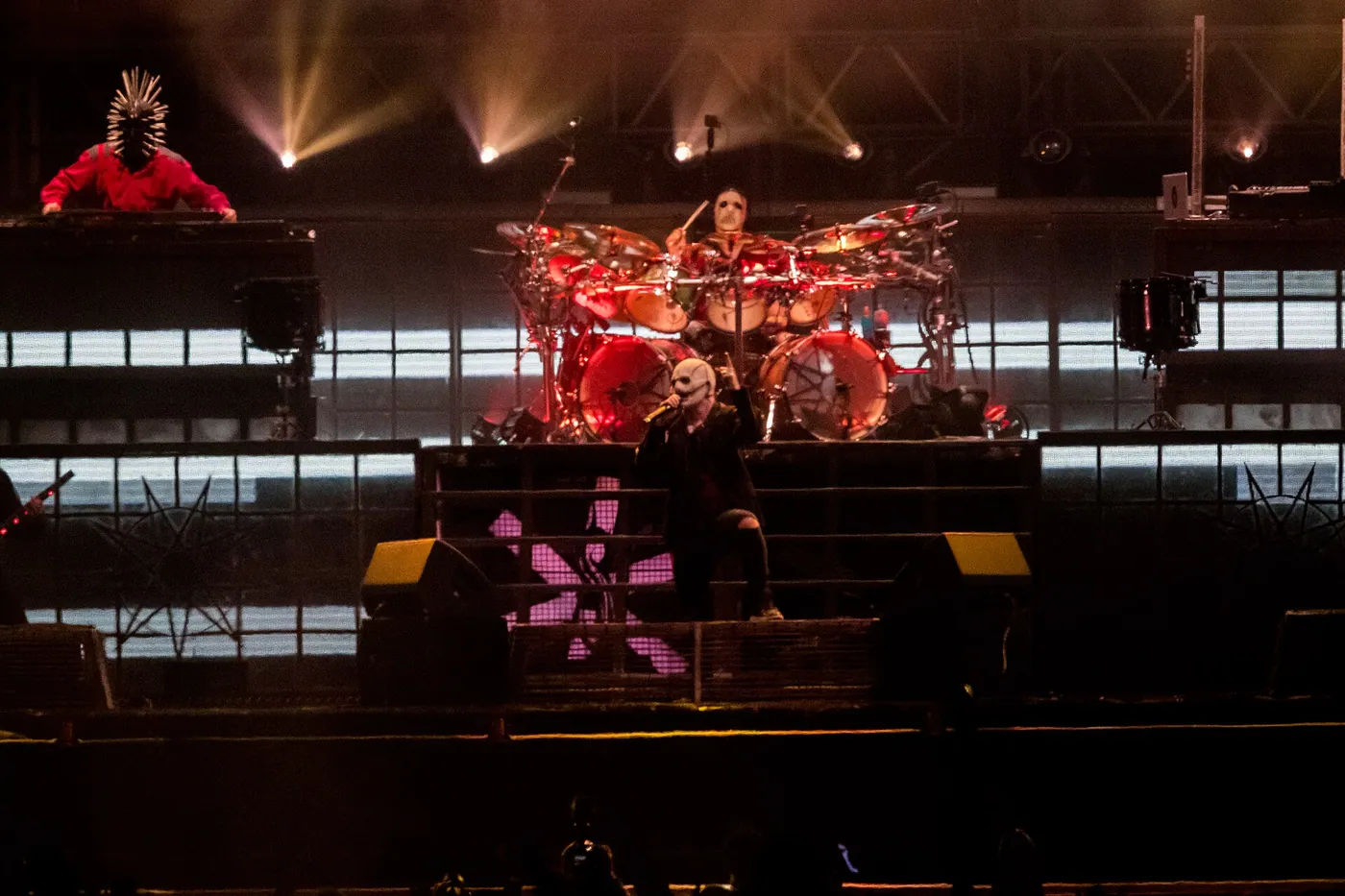
Masks, stage clothing, lighting, and movement help make a Slipknot performance immediately identifiable. Their creative value lies in the way those elements support a shared musical world. An audience can recognize individual performers while also experiencing the ensemble as a single, coordinated presence.
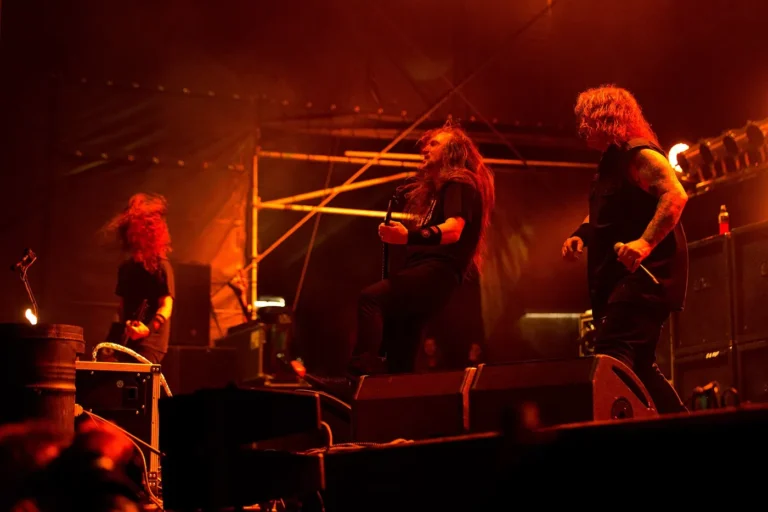
A concert photograph can make those relationships visible. The arrangement of musicians across a stage reflects the different layers heard in the recordings, while lighting changes the apparent scale of the scene. The visual presentation gives physical form to the same interest in contrast, texture, and emphasis.
For an attentive viewing session, watch how a familiar song is introduced and how the audience recognizes its central figure. The moment of recognition connects the music to the wider performance. A small melodic or rhythmic idea becomes the shared center of a much larger experience.
Several albums make useful starting points
The band’s official music collections provide a map through Slipknot, Iowa, Vol. 3: (The Subliminal Verses), and later releases. These records offer different balances of density, atmosphere, and melodic focus. They are most rewarding when approached as distinct musical settings rather than interchangeable examples of one sound.
Vol. 3: (The Subliminal Verses) is an inviting introduction for someone who connects strongly with "Duality" and "Before I Forget." The official album collection offers a route toward that chapter. A listener drawn toward the earlier rhythmic intensity can explore the self-titled album and Iowa next.
Slipknot’s creative achievement is the way a broad palette becomes a coherent identity. Percussion, guitar, voice, electronics, and visual performance all offer distinct attractions, yet the song remains the point where they meet. Following one of those elements through a familiar track can reveal how much careful organization sits inside the music’s immediate excitement.
Featured image: Slipknot’s stage performance at Wacken Open Air in 2022. Photo: Sven Mandel / Wikimedia Commons source / CC BY-SA 4.0. Resized and converted to WebP.